
Hack The Box
Thought leadership / Sales enablement / Subject matter expert interviews
Hack The Box is a cybersecurity training platform that’s well-loved by aspiring penetration testers, SOC analysts, and anyone who wants to learn about the industry.
But we had bigger ambitions. What about businesses? How could we raise the stakes and make HTB the go-to internal cybersecurity training platform for employees? That was my job.
Before I could create any content, I needed to make sure Hack The Box was seen as credible in the B2B space.
So, using LinkedIn, I built a pool of 100+ external industry SMEs (CISOs, hiring managers, analysts, recruiters) to provide insight and help distribute content.
It quickly became a badge of honour to be recognised as a Hack the Box subject matter expert.
Recruiting SMEs

Helping CISO’s speak the right language
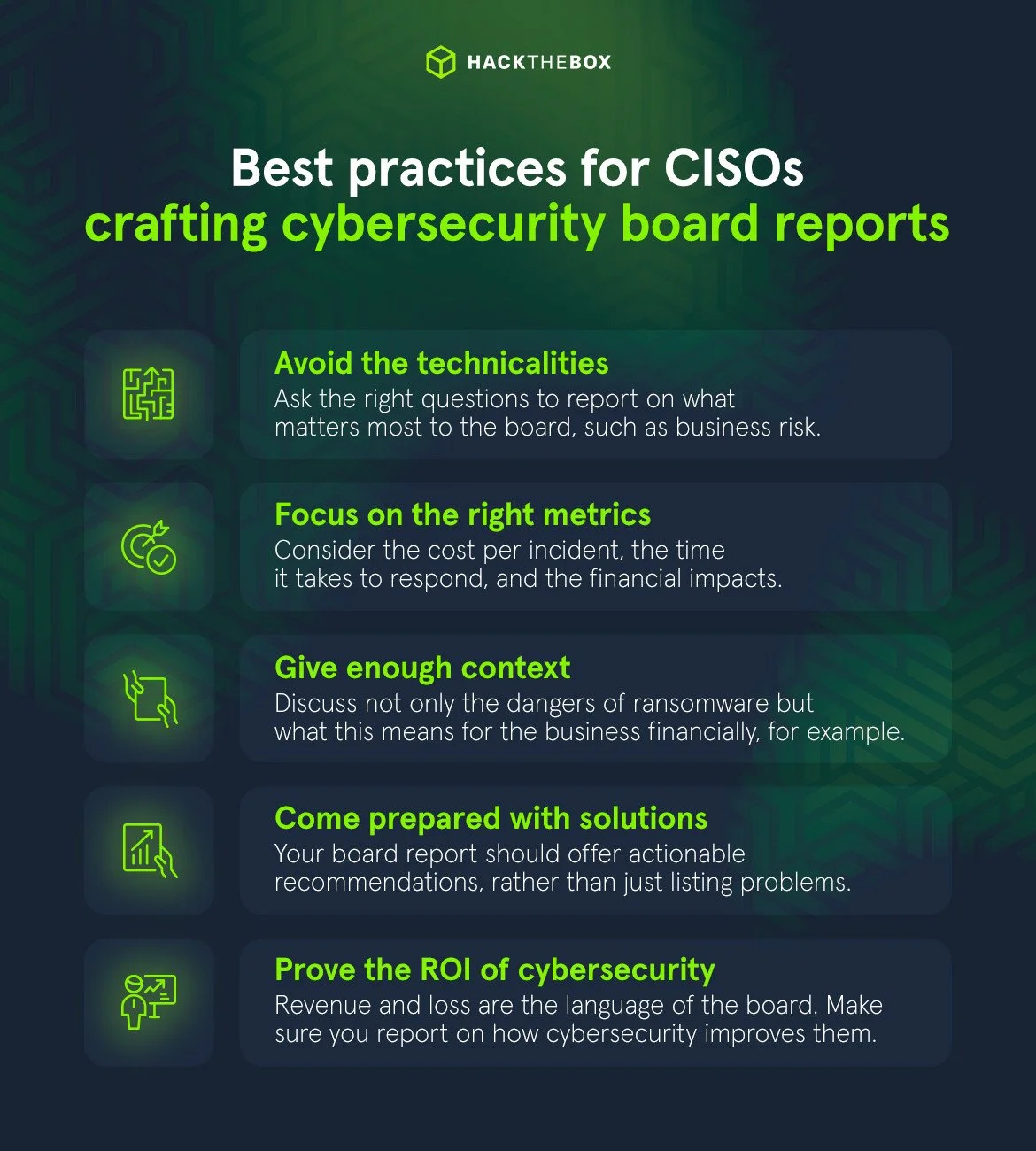
CISOs (Chief Information Security Officers) struggle to translate security work into language a board will actually approve budget against.
From conducting multiple CISO interviews, it became clear that the gap wasn't security knowledge, it was framing security as business risk in board-native terms.
Result: a practical toolkit built around that reframe, not generic security advice.
Proving our worth to a skeptical buyer

The brief was open-ended: "what made Hack The Box different?" a hard question to answer for an audience (CISOs, red teams) who are naturally skeptical of vendor claims and see through generic positioning fast.
My insight was that this audience trusts specificity over superlatives, so instead of claiming HTB was "the best," I built the guide around concrete differentiators (real-world attack simulation, gamified skill-building) that a technical buyer could verify and defend internally to their own stakeholders.
High performance cybersecurity whitepaper
Security teams are stretched by talent shortages, burnout and a gap with the wider business. Leaders often treat security as a reactive, compliance-driven cost rather than a capability they build.
Leaders respond better to a “build it strong from the ground up” message than to fear. So I framed workforce development as an investment in people’s careers, not a defence against the next breach.
It follows the leader’s journey (attract, onboard, upskill, retain, prove value) and ties cyber performance to business goals.